

SAFFiRE Renewables’ Pilot Plant
Fueling the Future of Flight Through Renewable Innovation
The Challenge
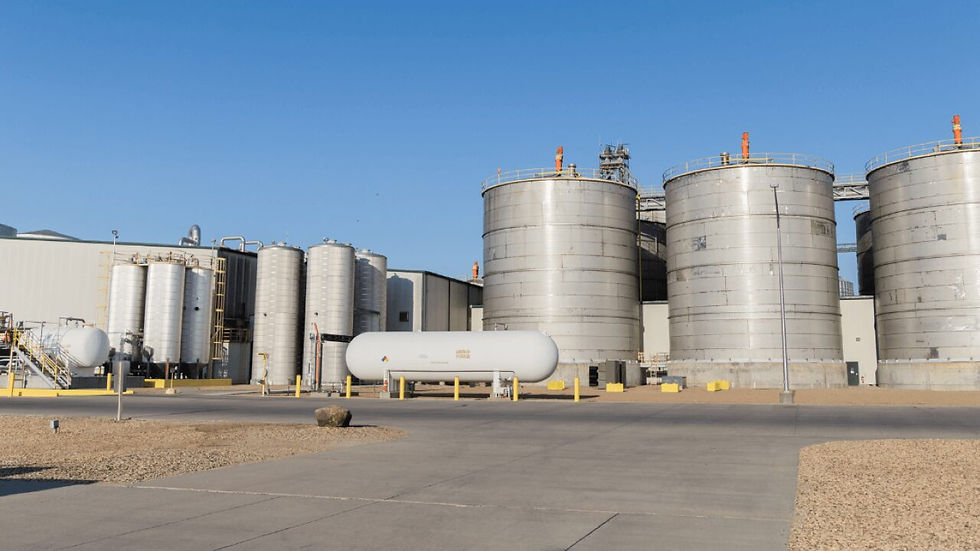
As a wholly owned subsidiary of Southwest Airlines Renewable Ventures, SAFFiRE is pioneering the large-scale commercialization of cellulosic ethanol—transforming agricultural residues into sustainable aviation fuel (SAF). Backed by the U.S. Department of Energy (DOE) and leveraging technology from the National Renewable Energy Laboratory (NREL), SAFFiRE’s Phase Two pilot facility in Liberal, Kansas, aims to demonstrate the full integration and viability of its corn-stover-to-ethanol conversion process. To assess the initiative’s potential, SAFFiRE sought a detailed evaluation of its economic and social benefits.
How We Helped
In July 2024, Tripp Umbach was engaged to measure the economic and community impact of SAFFiRE’s pilot facility—analyzing both construction and operational phases at the local and state levels. The study quantified the project’s contributions to job creation, tax revenue, and regional revitalization, providing a data-driven foundation to communicate the project’s significance to stakeholders, investors, and the surrounding community.
The Impact
The SAFFiRE pilot plant represents a transformative investment for Southwest Kansas and the broader state economy. Construction alone is projected to generate $66.7 million in local impact and $83.4 million statewide, while ongoing operations are expected to contribute $6.9 million regionally and $8.6 million statewide each year. Beyond economic growth, SAFFiRE is positioning Kansas as a national leader in renewable fuel innovation—advancing sustainability, energy independence, and rural economic opportunity.